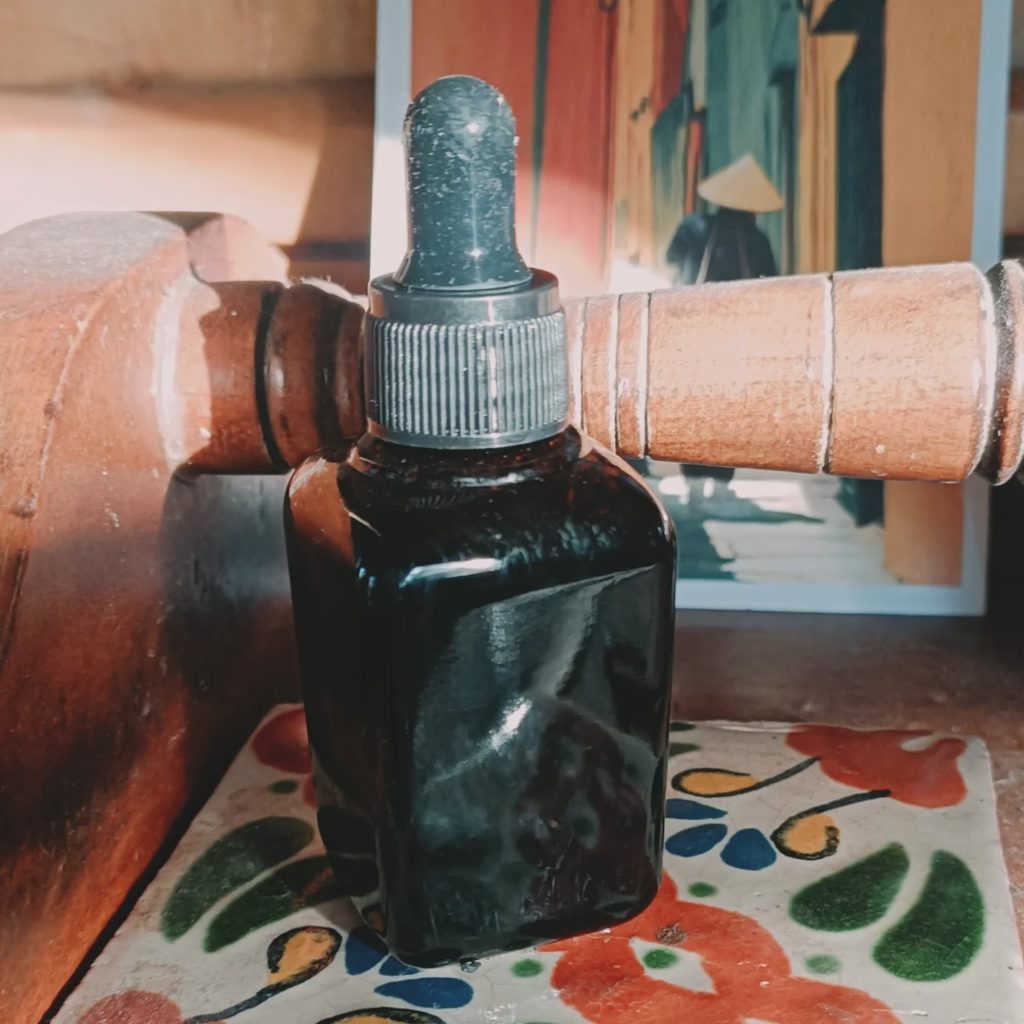
I swapped the towpath for a workshop table this weekend to try my hand at something a little different. No hammering or filing this time—just crushing, stirring, and a little bit of chemistry.
I’ve always been fascinated by how things used to be made, “properly” made, before you could just buy them in plastic bottles. So, when I saw a workshop on making Oak Gall ink, I jumped at it. It’s the stuff they used to write the Magna Carta and Da Vinci’s notes, so I figured if it was good enough for Leo, it was good enough for me!
The Magic of the “Marble”
If you’ve ever walked in the woods (which I do a lot, usually on my way to the wagon!), you’ve probably seen oak galls. They look like little wooden marbles stuck to the branches.
I learned they are actually formed when a wasp lays an egg in the bud. The tree grows a hard shell around it to protect itself. It sounds a bit sci-fi, doesn’t it? But nature is strange like that.
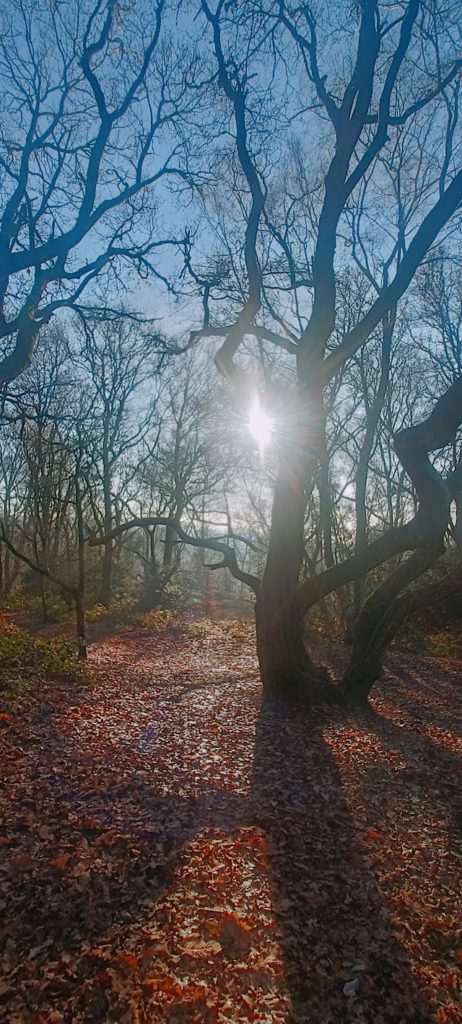
Collecting them felt very “hunter-gatherer,” but the real work started with the pestle and mortar. Crushing them down is satisfying work—it’s noisy, crunchy, and releases this earthy, tannic smell that immediately made me think of the damp woods around Stewart’s place.
Wait, why does this work? (The Science Bit)
I’m not a chemist, but I had to ask: how do you get black ink from brown nuts? It turns out it’s all about the reaction between the tannic acid in the galls and the iron sulphate.
Historically, this was the ink. If you look at old manuscripts like the Magna Carta, or even Da Vinci’s sketchbooks, you are looking at oak gall ink. It’s famous for “biting” into the parchment (which is why they call it iron gall ink).
It actually eats into the paper slightly over centuries. I love that idea—that the words aren’t just sitting on top of the page, they are physically becoming part of it. It feels very permanent in a disposable world.
The “Aha” Moment (Iron and Ink)
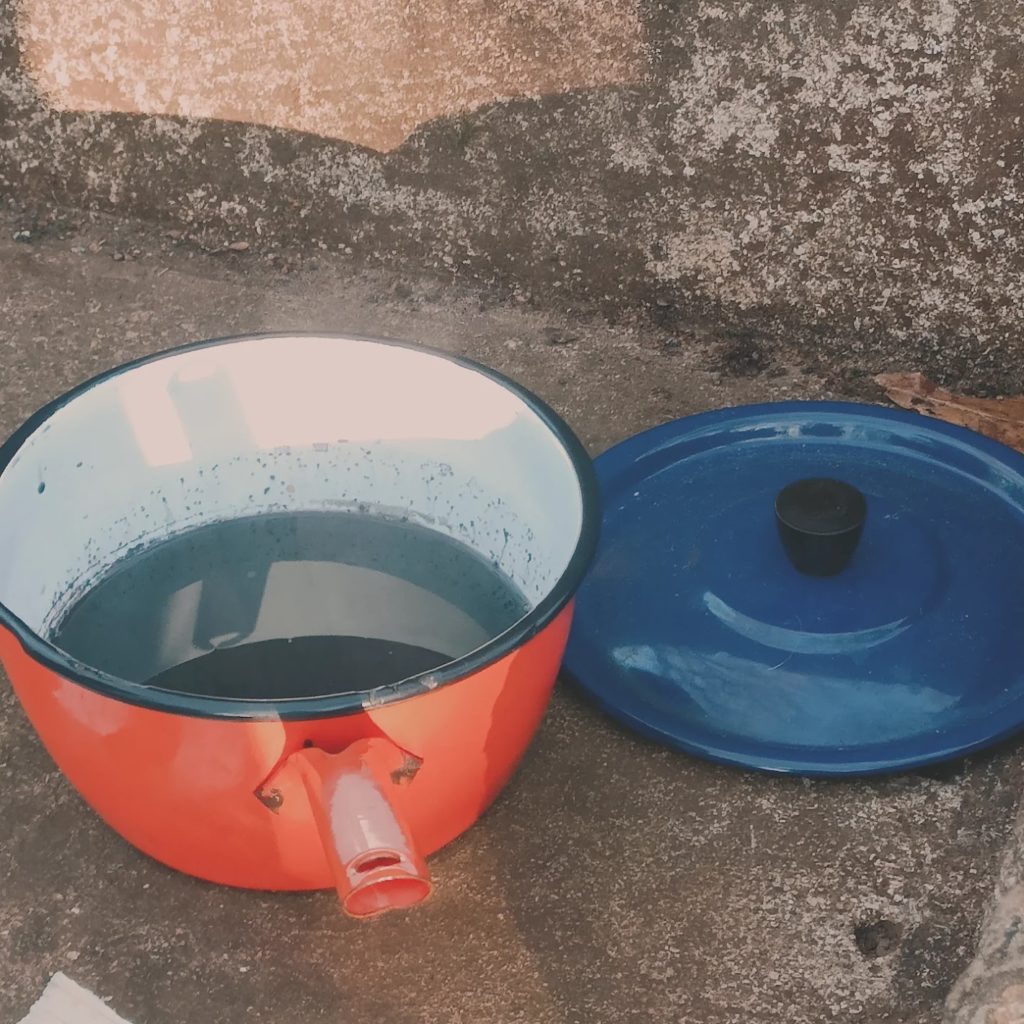
Here is the part that blew my mind, and I know Stewart would love this bit. You boil up the crushed galls to get a brown, tea-like liquid. It looks… well, a bit like muddy puddle water.
But then comes the magic. You add Iron Sulphate (which is basically rusty iron).
In a split second, the liquid turns from tea-brown to a deep, jet black. It’s proper alchemy! It felt less like a craft workshop and more like a potions class. It made me think of Stewart’s horseshoe nails immediately—that connection between the organic oak and the hard iron. It seems our lives are colliding in more ways than one!
How we actually made it (The Recipe)
If you fancy having a go yourself (and you can find an oak tree!), here is the rough method we used. It’s surprisingly simple, like making a very forbidden soup.
What you need:
Oak Galls: You need about a handful (crushed). Look for the ones with holes in them—that means the wasp has already left!
Water: Rainwater is best (lucky for us, we have plenty of that on the boat), but tap water works too.
Iron Sulphate: You can buy this as a powder (often sold as garden fertiliser or natural dye fixative).
Gum Arabic: This thickens it up so it flows nicely off the pen.
The Process:
The Crush: Smash the galls. A hammer or a heavy stone works wonders. You want a rough powder, not dust.
The Simmer: Put the crushed galls in water and simmer them. It smells earthy and tea-like. We let ours bubble away for about 20 minutes until the liquid was dark brown.
The Strain:Filter out the woody bits through an old muslin cloth (or an old t-shirt you don’t mind ruining). We used coffee filter paper.
The Magic Moment:Add a teaspoon of Iron Sulphate. This is the best bit—watch it turn instantly black.
The Binder: Stir in a little Gum Arabic if you want it to be glossy and smooth.
Top Tip: Don’t use your best saucepan for this! The iron stains everything. We used an old pot that has now been officially retired from baked bean duty.
Oak Gall ink, made in the woods
Slowing Down
The resulting ink isn’t like the stuff you get in a Biro. It has a personality. When you put it on paper, it starts pale and darkens as it dries and oxidises with the air. You can’t rush it.
I found myself slowing right down. In a world where we tap screens and expect instant results, waiting for the ink to “settle” felt surprisingly good. It’s unpredictable, a bit messy, and utterly beautiful.
Bringing it back to the Boat
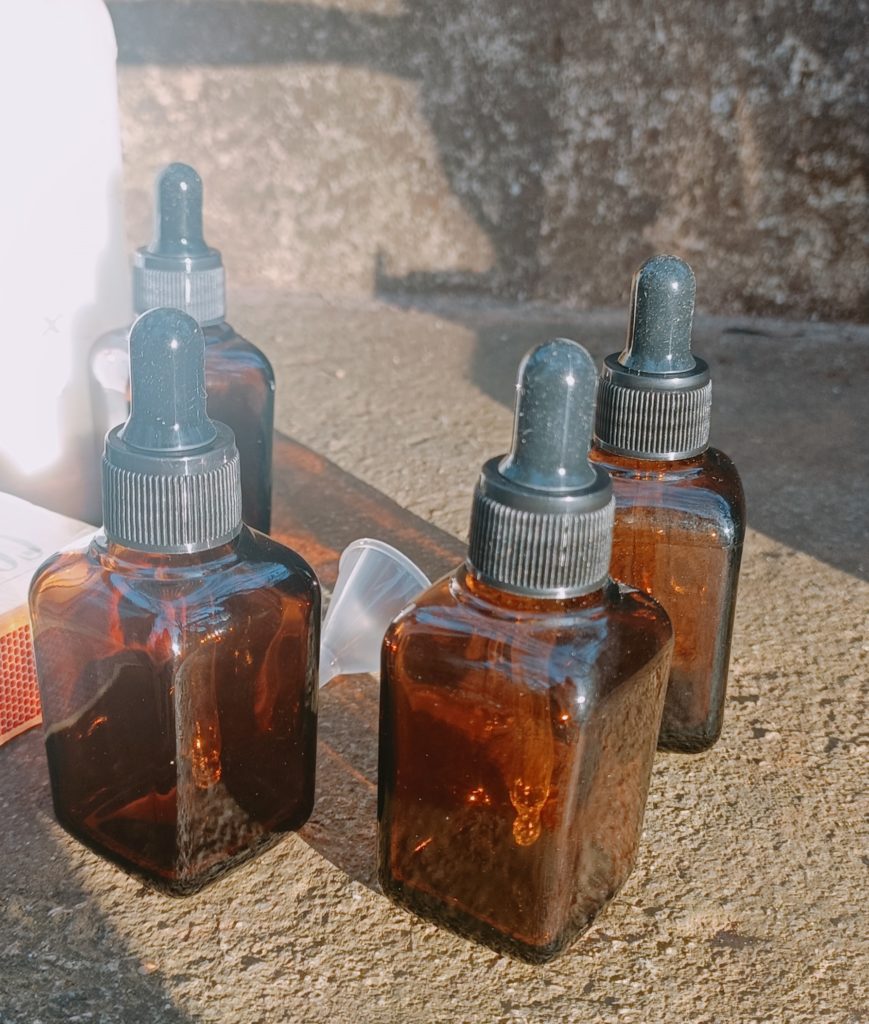
I’ve brought a little jar back to the narrowboat. I’m planning to use it to sketch out some new jewellery designs. There is something lovely about drawing a design for an iron nail using ink made from iron and oak.
It’s definitely influenced how I’m thinking about our jewellery—letting the materials speak for themselves rather than trying to force them to be perfect.
Have you ever tried making your own art supplies? Or foraged for oak galls? Let me know in the comments—I’d love to hear your stories